Rovent: A Bold Display Font for Retro-Inspired Design
In a digital landscape saturated with minimalist sans-serifs and clean geometric typefaces, finding a font that commands attention without sacrificing readability is a genuine challenge. Rovent enters this space not as a subtle background element, but as an assertive, trendy, and retro-styled display font designed to be the focal point of any project. For professionals, entrepreneurs, and creators aged 20 to 50 who need to make a visual statement, understanding the specific utility of such a typeface is essential before integrating it into a workflow.
This evaluation focuses on the practical application of Rovent, examining its technical specifications, aesthetic versatility, and how it performs in real-world design scenarios. The goal is to determine whether this asset offers long-term value for serious hobbyists, marketers, and publishers looking to elevate their visual identity.
Defining the Character of Rovent
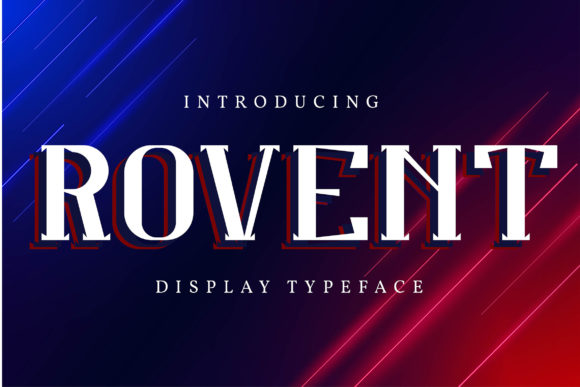
At its core, Rovent is a display typeface, meaning it is optimized for large sizes rather than body text. Its style leans heavily into a retro aesthetic, evoking the bold signage and graphic trends of mid-century modernism while maintaining a contemporary edge. The "assertive" nature of the font is immediately apparent; it does not whisper, it projects. This makes it particularly effective for headlines, posters, logos, and packaging where immediate impact is required.
The font's design language balances nostalgia with usability. It avoids the excessive ornamentation that can plague many retro fonts, opting instead for strong structural integrity. When used correctly, Rovent provides a sense of established authority and playful confidence simultaneously. For a small business owner rebranding or a freelancer pitching a creative concept, the ability to convey this specific mood instantly is a significant advantage.
Technical Usability: The PUA Advantage
One of the most critical aspects of using any specialized font is access to its full character set. Many display fonts limit users to standard ASCII characters, forcing designers to use workarounds or external tools to achieve certain effects. Rovent distinguishes itself through its Private Use Area (PUA) encoding.
PUA encoding allows the font to utilize Unicode slots reserved for private use, effectively unlocking a vast array of glyphs, swashes, and stylistic alternates that are not available in standard system fonts. For the user, this translates to ease of access. Instead of manually constructing complex ligatures or searching for alternative characters, the designer can access these unique elements directly from the keyboard or font menu.
- Immediate Access: All swashes and decorative variants are mapped to accessible keys, streamlining the composition process.
- Consistency: Because the glyphs are built into the font file, they maintain consistent weight and alignment with the base characters.
- Flexibility: Designers can mix standard characters with elaborate swashes to create custom hierarchies without breaking the visual flow.
This technical feature significantly reduces the friction often associated with using novelty fonts. It ensures that the creative vision is not hindered by technical limitations, making Rovent a reliable tool for both quick mockups and polished final deliverables.
Aesthetic Versatility and Application
The strength of Rovent lies in its versatility. While its primary identity is retro, the underlying structure allows it to adapt to various contexts. It is not limited to just one era or genre. A well-executed layout using Rovent can feel like a vintage movie poster, a modern streetwear brand, or a high-end craft product label.
For marketers and content creators, this flexibility is invaluable. A single font family can serve multiple campaign needs. Consider a blogger creating a series of social media graphics; Rovent can anchor the main headline while allowing for varied subheadings through the use of different glyph sets. Similarly, educators or publishers can use it to break up dense text blocks in educational materials or newsletters, adding visual interest without compromising legibility at larger sizes.
The font's presentation quality is high. The strokes are uniform enough to ensure clarity but possess enough variation to avoid feeling robotic. When paired with appropriate negative space, Rovent creates a balanced composition that guides the viewer's eye naturally. However, its effectiveness is contingent on proper sizing. As a display font, it loses its intended impact when scaled down too far, becoming difficult to read and losing its distinctive character.
Evaluating Performance in Real-World Scenarios
To understand the true value of Rovent, one must look beyond the specimen sheet and consider how it functions in production environments. In terms of reliability, the font demonstrates consistency across different software platforms. Whether used in vector-based design tools like Adobe Illustrator or raster-based editors, the output remains sharp and true to the original design intent.
Strengths in Professional Contexts:
- Brand Identity: Startups and entrepreneurs seeking a distinct voice can leverage Rovent to stand out in crowded markets. Its assertive tone helps establish a memorable brand personality.
- Editorial Design: Magazine editors and publishers can use it for pull quotes and section headers, adding a layer of sophistication and style to editorial layouts.
- Event Marketing: Posters and flyers for concerts, workshops, or community events benefit from the energetic vibe the font conveys.
Potential Limitations:
No single typeface is a universal solution. Rovent is not suitable for long-form body copy. Attempting to use it for paragraphs of text will result in reader fatigue and reduced comprehension. Furthermore, while the PUA encoding is robust, users must ensure that the target environment supports the specific encoding if the document is being shared with clients who may not have the font installed. In web design, for instance, embedding a PUA-encoded font requires careful implementation to ensure cross-browser compatibility and correct glyph rendering.
Who Benefits Most from Rovent?
Identifying the right audience for a design asset is crucial for maximizing return on investment. Rovent is best suited for individuals and businesses that prioritize visual impact and brand differentiation.
Freelancers and Agencies: Professionals working on diverse client projects need a toolkit that offers variety. Rovent provides a ready-made solution for projects requiring a bold, nostalgic, or trendy look, saving time on custom lettering or searching for disparate assets.
Social Media Managers and Content Creators: In the fast-paced world of digital content, grabbing attention within seconds is vital. The unique shapes and swashes of Rovent allow creators to produce eye-catching thumbnails and headers that perform well in feed algorithms.
Small Business Owners: For those managing their own branding, having a cohesive and professional-looking typeface simplifies the design process. Rovent allows non-designers to create materials that look professionally crafted, enhancing the perceived value of their products or services.
Strategic Recommendations for Implementation
To get the most out of Rovent, integration should be strategic rather than ubiquitous. The font works best when used sparingly and with purpose. Pairing it with a neutral, highly readable sans-serif for body text creates a harmonious contrast that highlights the display qualities of Rovent without overwhelming the reader.
Designers should experiment with the PUA glyphs to create custom logotypes or unique wordmarks. The ability to access swashes easily encourages experimentation, leading to more original and personalized designs. Additionally, testing the font across various mediums—from high-resolution print to mobile screens—is recommended to ensure scalability and legibility remain intact.
Ultimately, Rovent represents a solid addition to a designer's repertoire. It combines technical accessibility with a strong aesthetic identity. For those willing to respect its role as a display font and leverage its unique features, Rovent offers a practical and effective way to communicate bold ideas. It is a tool that, when used with intention, can transform ordinary layouts into spectacular designs that resonate with audiences.